
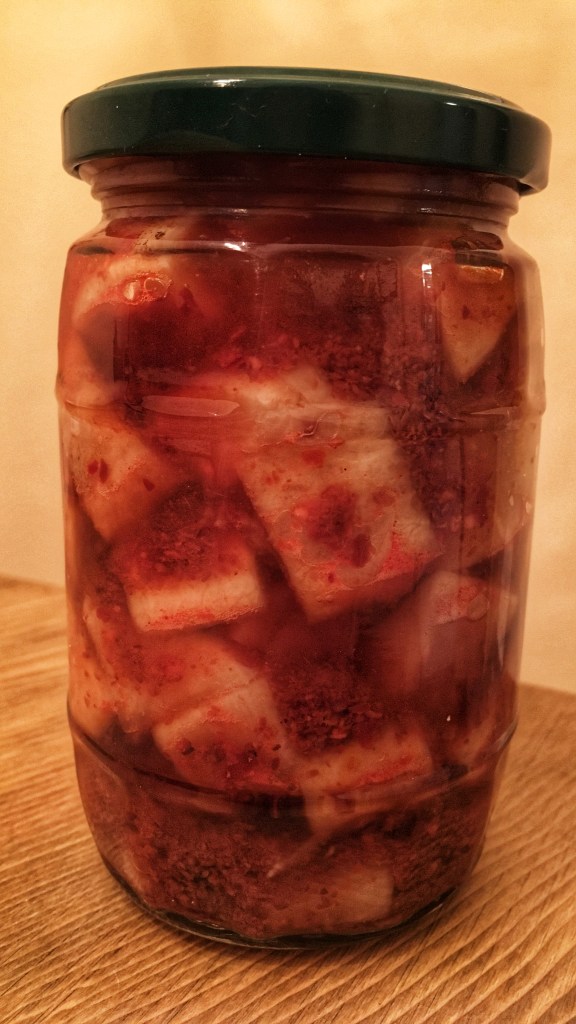
White radish kimchi or kkakdugi kimchi in Korean is the perfect sister recipe to Napa cabbage (baechu) kimchi. Whenever I make baechu kimchi, the most common fermented cabbage kimchi that most of us are familiar with, I make the daikon version at the same time. If you look at the recipe for baechu you will understand why. It calls for 8 ounces of a huge several pound daikon radish. That leaves you with a lot of leftovers. This recipe is fairly effortless, a good way to eliminate food waste and you get a healthy fermented snack as well! We like to eat it on its own as a side to rice dishes or noodle soups. It can also be added to store bought ramen to give it more flavor and texture. Other ideas are to add it as a component to a bean sprout salad, dice it up for an omelette or as an addition to a dumpling, spring or summer roll. It could also be an interesting addition in pork or beef dishes.
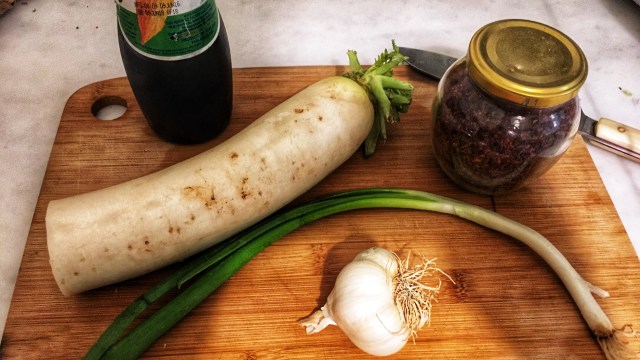
Ingredients
1 Daikon Radish -weighing roughly a pound
½ Tablespoon Salt
½ Tablespoon Sugar
1 Tablespoon Garlic-minced
1 Scallion- chopped in thirds
½ Tablespoon Fish Sauce- can be eliminated for a vegetarian option
3 Tablespoons Chili Flakes
1 Tablespoon Reserved Daikon Juice
Method
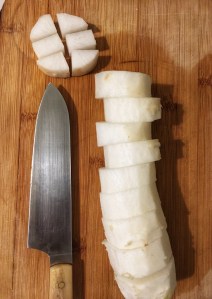
Peel daikon and chop into even 1 centimeter cubes
In a bowl cover with salt and sugar allow to sit for 30 minutes, turning occasionally.
Drain the resulting liquid but do not rinse the radishes. Reserve 1 tablespoon liquid for later use.
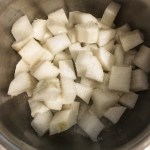
In a bowl mix the radish, scallion, garlic, fish sauce, red pepper flakes and the reserved daikon juice. Make sure all the cubes are well coated. Transfer to a vessel.
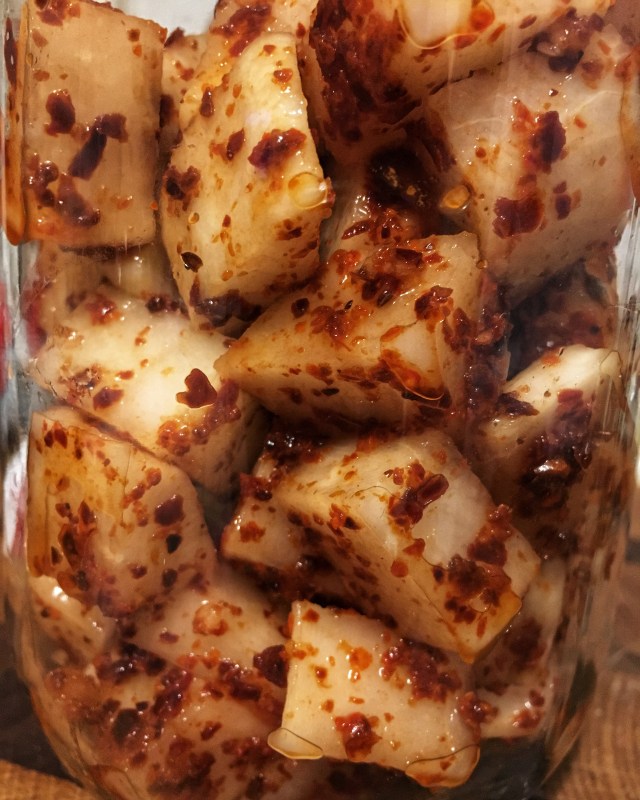
Daikon kimchi can be eaten immediately or can be left in a cool place, lid on, to ferment for a day or two before eating. Store in the refrigerator once level of fermentation has been reached.
 Keshkek Meshkek