
I belong to a social media group of foreign women residing in Istanbul. One of the most common topics is the frustration women feel with their Turkish partners eating habits. Turks are famously Turkish cuisine centric and for the most part whole heartedly believe that their food is the best food in the world and therefore need try no other. And more specifically that their mother’s way is the only way it should be prepared. They are often unwavering in their habits, I can recall one post where a young woman was at her wits end with the fact her boyfriend insisted on eating a loaf of bread with every meal, as is commonly done here. That post garnered over 350 comments in the thread! I have always followed these post with pity and a bit of bemusement. My mother-in-law while an excellent pastry maker is a terrible cook. So I never had to compete with that. But also, my husband is a rare Turk who loves trying different cuisines as much as I do. He is equally as inquisitive. It has been a blessing both in our relationship and in my online forum. I can use it for more important things, like complaining about my neighbors.
His favorite cuisine is Korean, but there are only a handful of Korean restaurants in Istanbul. They are expensive and not so great. So I make a lot of the basics at home. Specifically the banchan which are all the pickled, fermented, salty, spicy delicious little side dishes that go along with the main course. We probably love these even more than the main courses. When we go out to eat we definitely embarrass ourselves by asking for more than our fair share of refills. Kimchi is the most well known banchan, salted fermented vegetables, the most typical being Napa cabbage and best known for its heat.
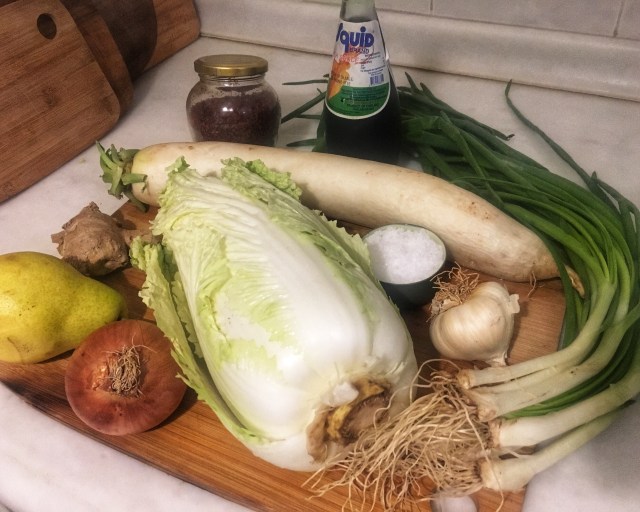
Ingredients
Napa Cabbage -weighing 2 pounds
½ Cup of Pickling Salt- or other large grain salt
½ – 1 Cup Chili Flakes
¼ Cup Fish Sauce – can be omitted for a vegetarian version
5-6 Garlic Cloves
Ginger- 1 inch piece minced
½ Onion
½ Pear or Apple
8 Oz Daikon Radish- shredded
3-4 Scallions- Cut in thirds
Method
Halve the cabbage lengthwise and remove the core then cut into fifths which each section being several inches.
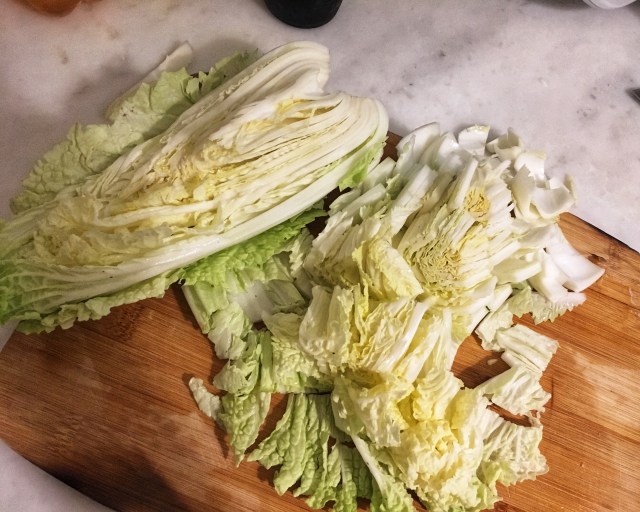
In a bowl salt the cabbage and massage the salt well. Pour two cups of water into the salt and cabbage mixture and toss well. Soak for 1 hour to 1.5 hours turning the mixture every 30 minutes.
Rinse the cabbage 2 or 3 times and drain well. Squeeze out the excessive liquid and transfer to a large mixing bowl.
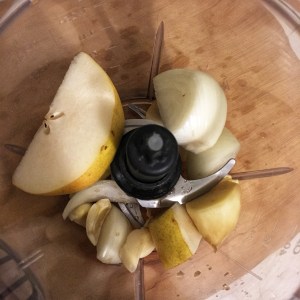
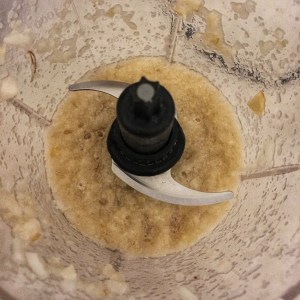
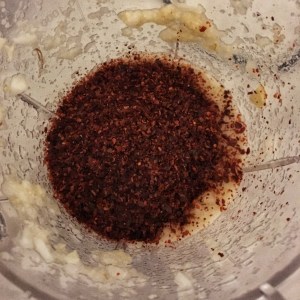
In a food processor blend the onion, fruit, garlic, ginger and fish sauce creating a paste. Add the chili flakes to this paste.
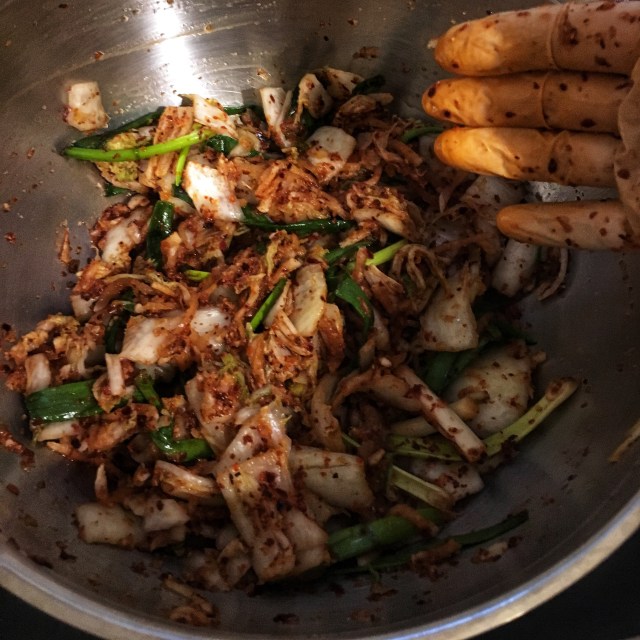
Add the shredded daikon radish and scallions to the cabbage and next add the chili paste, mix well. It is advisable to wear gloves unless you want your hands stained red.
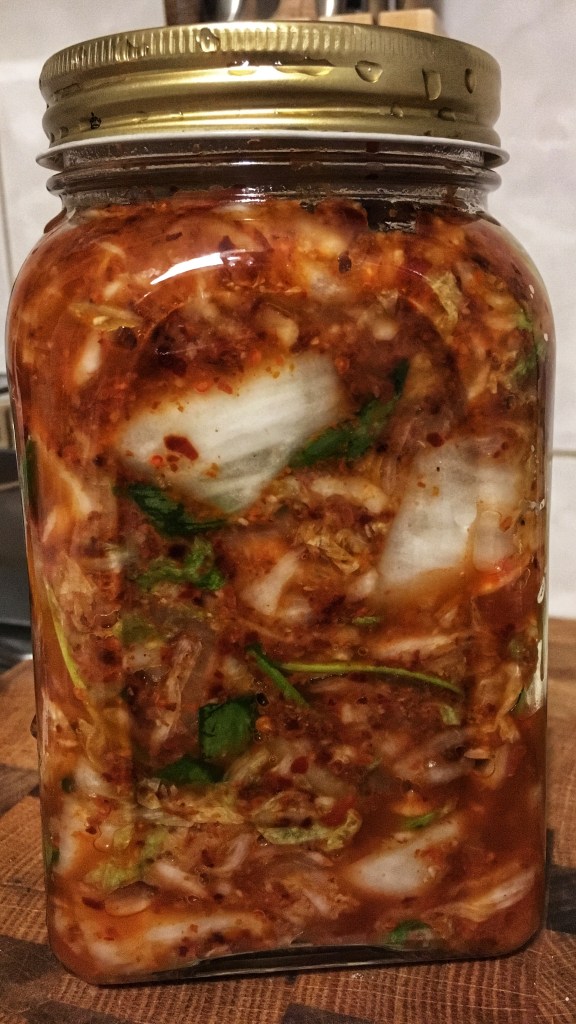
Transfer to a vessel, take care to leave 1 inch of headspace. Secure the lid. The kimchi will weep as it ferments and without enough headspace it can make a big mess. Leave on your counter in a cool place for 5-7 days.
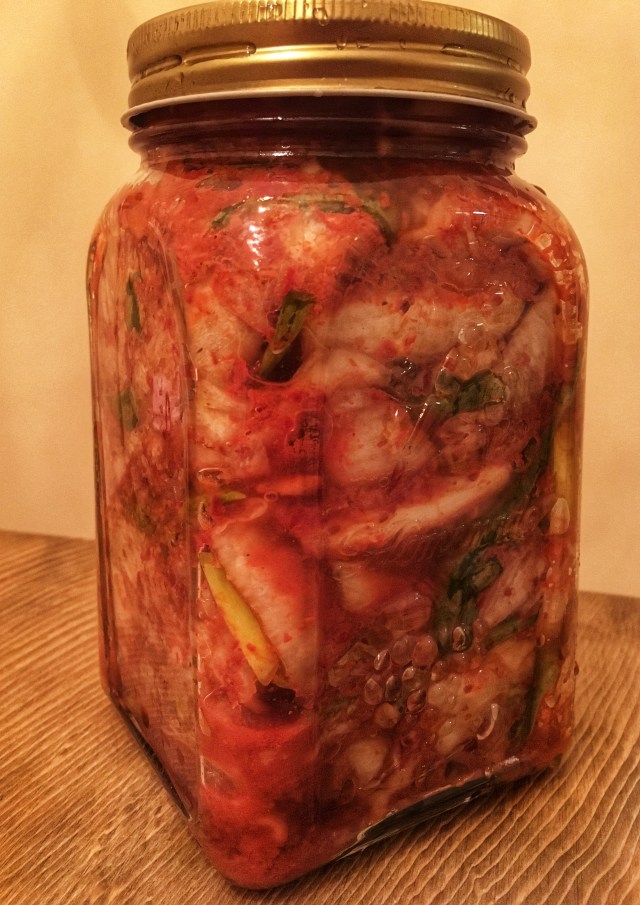
Once fermented to your liking refrigerate. Kimchi can be kept for a very long time, the properties will change over time. I had one jar fermenting for almost 2 years before my sister-in-law threw it away. She thought it had gone bad..
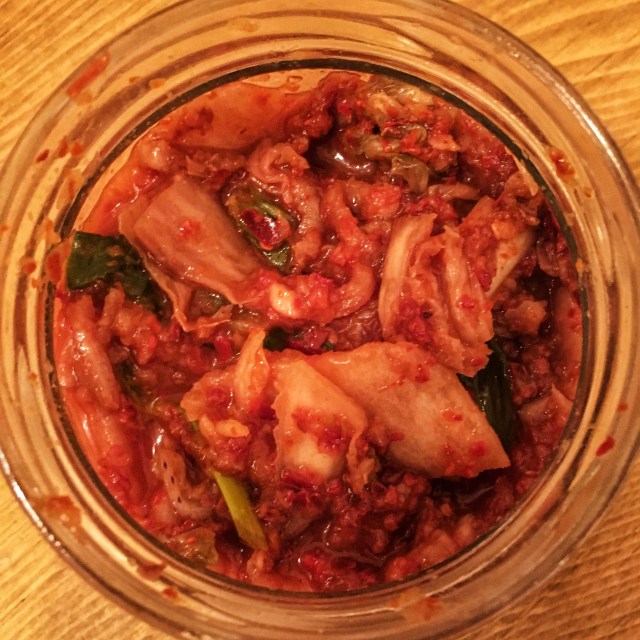
I like to keep a jar of kimchi in my refrigerator at all times. It’s extremely versatile. You can add it to soup or store bought ramen to kick up the heat and flavor. Use it in a stir fry, add it to tacos or as a filling in dumplings. Kimchi is great in scrambled eggs or as a base for fried eggs. You could use it as a topping for pizza or a top a rice bowl. One of my favorite things to do is make kimchi mac and cheese or kimchi grilled cheese. You don’t see much dairy or cheese in Korean cuisine but the flavors in this case work really well! Your imagination is the limit with kimchi.
 Keshkek Meshkek
Pingback: Kkakdugi Kimchi- White Radish Kimchi – Keshkek Meshkek